
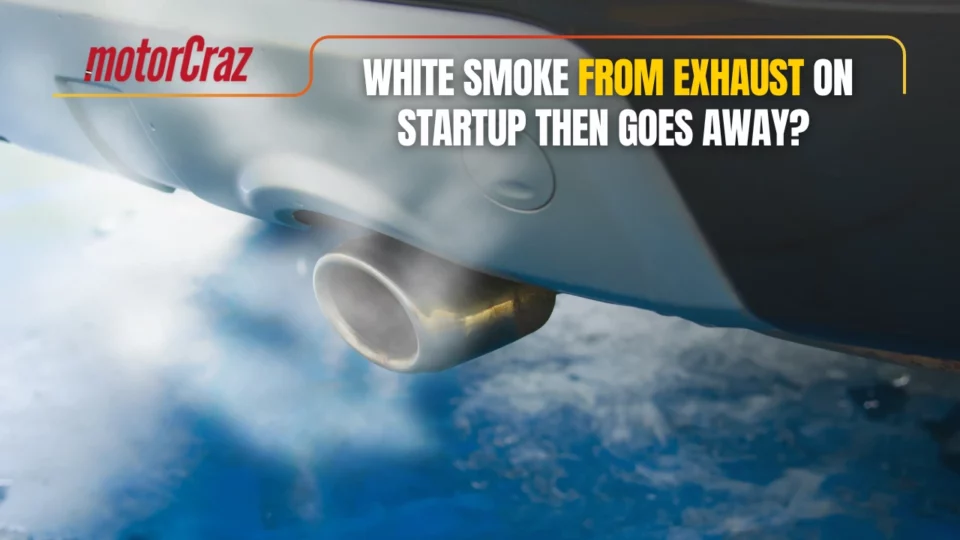
If you have come across white smoke from exhaust on startup then goes away after a minute or two, you are not alone. This is one of the most common issues that car owners come across, especially in colder weather. Sometimes, white smoke coming from your exhaust is nothing but a harmless steam. However, other times, it is an early warning sign of something serious like a coolant leak or blown head gasket.
In this guide, we will help you understand the difference, explore both normal and dangerous causes, and walk you through how to inspect, fix, and prevent white smoke issues, whether you’re driving a Chevy, a diesel, or anything in between.
What Does White Smoke from Exhaust on Startup Then Go Away Usually Mean?
If you see a cloud of white smoke on startup that quickly disappears, it is usually condensation turning into steam. It is extremely normal, especially on cold mornings. However, if the smoke is thick, smells sweet, or happens daily, it may indicate that there is a coolant leak or hidden engine problem.
Here’s an easy breakdown for you to understand better:
Harmless Scenario
A bit of thin, wispy white vapor on startup is just water evaporating from inside your exhaust system. It should fade within a few minutes. It is nothing to worry about.
Concerning Scenario
If the smoke is dense, lingers longer than 30 seconds, and smells sweet, it could be coolant entering the combustion chamber, indicating a blown head gasket.
When White Smoke on Startup Is Not Normal?
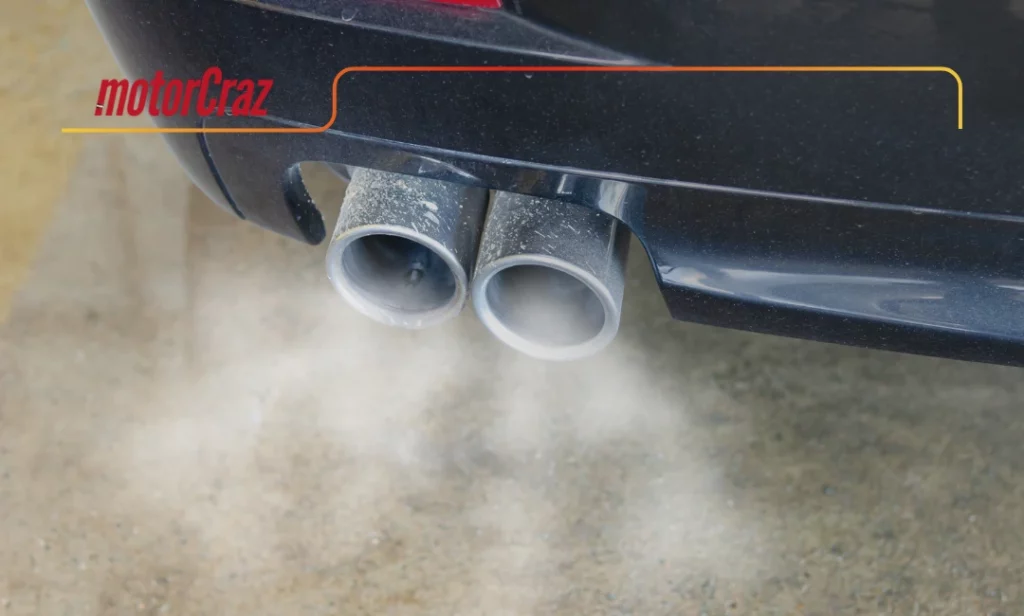
White smoke from your exhaust on startup is only normal if it’s thin, odorless, and disappears quickly. Anything thicker, smellier, or longer lasting is a warning sign that something is wrong under the hood.
While condensation is harmless, persistent or sweet-smelling smoke could mean your engine is burning coolant, leaking fuel, or suffering from a failing gasket.
The best way is to know what to look for before a small issue turns into a blown head gasket or worse. Here’s how to tell if your issue needs professional attention:
Duration
If the white smoke coming from exhaust on the startup but then goes away lasts more than a few minutes, especially in warm weather, it is not just condensation.
Smell
If you sniff up a sweet, syrupy smell, there is a high chance that the coolant is leaking and getting burned off.
Volume
If the thick white smoke from exhaust on startup then goes away and keeps coming back, it is a major red flag. We recommend stopping driving the car.
Frequency
If the appearance and disappearance of white smoke happens every time you start the car, even when the engine is warm, it is not normal.
Symptoms
If the white smoke comes with other symptoms like the car running rough, frequently misfiring, or showing low coolant levels all the time, your ride is dealing with some serious problems, needing professional inspection.
Whether you’re driving a pickup truck, an SUV, a sedan, or a diesel vehicle, these same warning signs apply. However, some engines (like diesel) are more prone to white smoke at startup when injectors or glow plugs are faulty.
Common Causes of White Smoke on Startup That Disappears
The most common reason white smoke appears briefly at startup and then disappears is condensation turning into steam. However, there are other causes that range from harmless to serious.
While some of these issues are seasonal or age-related (like moisture or worn valve seals), others like coolant leaks or fuel injector problems, can hint at deeper engine trouble.
Here we will break down each likely cause, explain how it behaves, and help you figure out whether it’s just vapor or a warning sign in disguise.
Condensation in Cold Weather (Harmless Steam)
White smoke on a cold morning is almost always just condensation evaporating from your exhaust system. The moisture tends to build up inside the tailpipe overnight, and when the engine warms up, it turns into steam.
This harmless steam will have no smell and will disappear quickly. This is nothing to worry about. You can come across this phenomenon even on newer vehicles like Toyota Sequoia, Ford Escape, and others. If the white smoke is gone in under a minute and doesn’t return, you’re in the clear.
One Reddit user described exactly what many of us see on cold mornings. He shared: “I used to get scared with white smoke coming out of my exhaust. But turns out it was just water vapor because smoke doesn’t dissipate as quickly as water vapors.”
Their experience perfectly matches what most car owners come across. A quick puff of vapor that vanishes is just your car breathing out moisture and nothing to panic about.
Coolant Leak Into Combustion Chamber
If the smoke is thick, sweet-smelling, and recurring, you could have coolant leaking into the cylinders. It is likely to happen due to a blown head gasket, cracked head, or intake manifold failure. Low coolant in the reservoir, white, foamy residue under the oil cap, engine misfire or poor performance, and smoke lingering even in warm weather are other signs signaling this serious cause.
If you see any of these signs, stop driving immediately. Coolant in the combustion chamber can ruin your engine fast. It is way more serious than engine overheating.
Leaking Fuel Injector (Especially on Diesel Engines)
For diesel vehicles, white smoke during startup is often caused by incomplete fuel combustion. This happens when an injector leaks overnight or a glow plug fails to properly ignite the diesel. If you drive a Duramax, Cummins, or Powerstroke and see white smoke from the exhaust on startup then go away, you may need new injectors, glow plug replacement, or fuel system diagnostics.
This one isn’t just a smoke issue. It is a severe mechanical fault that can affect performance and emissions.
Worn Valve Seals or Piston Rings
If your engine oil is leaking past the valve seals or piston rings, it may briefly burn off on startup, producing light white or bluish smoke that disappears as the engine warms up. You can make sure by looking for oil consumption without visible leaks and any residue on spark plugs. Also, it is a common occurrence in high-mileage engines.
This issue won’t usually cause a sweet smell, but it’s still something to monitor, especially if the smoke gets worse over time.
One Redditor shared this helpful insight when tracking down persistent white smoke: “As it sat, oil from the cylinder head would leak past the seals. As soon as I cranked it, it would shoot out a big plume of smoke until it all burned off.”
In this case, the issue wasn’t a head gasket. It was worn valve seals slowly leaking oil into the cylinder overnight. Once fixed, the startup smoke disappeared completely.
Dirty Air Filter or Cold-Start Fuel Mixture
A clogged or dirty air filter may throw off the air/fuel ratio on cold starts, especially in older or carbureted engines. The result is a small cloud of white or grayish smoke that disappears quickly.
This one is more annoying than dangerous. A $15 air filter replacement can help you get rid of this issue.
How to Diagnose the Cause of White Smoke at Startup
To figure out why your car blows white smoke on startup that disappears, start by observing the smoke’s behavior, including thickness, smell, duration, and when it happens. These details can reveal whether you’re dealing with harmless condensation or something more serious like a coolant or fuel issue.
Start by checking the coolant levels. If they are low with no external, it is possible that there is an internal leak. You may need to take your ride to a professional. Follow this with engine oil inspection. Use a dipstick to check the oil level and consistency. If the oil is milky or frothy, there is coolant contamination, and you need to change it immediately.
Smelling the exhaust is your next task. If the odor is sweet, it means there is an issue with the coolant. However, if the odor is fuel-like, there is an injector issue.
Keep a close eye on the smoke behavior. If it is wispy, it is nothing but harmless steam. However, if it is thick and smelly, there is a bigger problem that needs your attention. Lastly, take a compression or leak-down test. It will confirm whether it is a gasket or engine damage.
MotorCrax recommends using an OBD2 scanner to look for hidden misfire codes. It does not matter if your check engine light is not on. It is always wise to eliminate all possibilities rather than end up with a busted ride.
What You Can Do and When to See a Mechanic
If your car blows white smoke on startup, there are a few simple things you can check and fix yourself. But if the smoke is thick, smells sweet, or keeps coming back, it’s time to call a mechanic.
The good news is that not all causes are expensive or urgent. You can take some of these as DIY tasks like changing an air filter or spotting leaks. Whereas others like a blown head gasket require professional tools and expertise to avoid major engine damage.
Thus, depending on the cause, here is how to handle it:
If it’s condensation no fix is needed as it is normal operation. However, if there is a dirty air filter, replace it with a new one. It will cost you anywhere between $10 and $20.
A leaky injector needs proper cleaning and sometimes replacements, especially on diesel engines. It is a tricky task and will require professional expertise to handle and can cost up to $500.
Whereas if the coolant leak or head gasket is the main culprit, you need to stop driving and call for a roadside mechanic or tow. The repairs can cost you about $1,000 to $2,500, depending on the engine type and severity of the issue.
Also Read: Thinking about going electric? Learn how to pick the right EV and find a loan that fits your budget.
How to Prevent White Smoke Issues in the Future
You can not prevent condensation as it is a natural process. Water droplets are highly likely to find their way into your exhaust system, and they will get steamed up every time you start your car.
However, when it comes to other serious issues that can cause white smoke, you can avoid them by maintaining your engine properly. Here is a checklist you can follow:
- Keep up with coolant flushes every 2–3 years.
- Replace worn gaskets and hoses before they fail.
- Use high-quality fuel and oil to keep injectors clean.
- Inspect your air filter for every oil change.
- Warm up your engine properly, especially in cold weather.
If you are a diesel owner, make sure your glow plugs are working properly before winter. It is the number one cause of white smoke from diesel engines at startup.
Frequently Asked Questions
Is white smoke from exhaust on startup dangerous?
Sometimes but not always. If the smoke disappears quickly and doesn’t smell sweet, it’s probably just condensation. However, if it is thick or persistent, take your ride to a professional auto repair shop.
Why does my Chevy blow white smoke only when I start it?
Chevys with aging intake gaskets or high mileage can leak coolant into the intake ports overnight. This leaked coolant starts to burn off when you start the engine. The best remedy is to replace the worn-out intake gasket and start taking better care of your engine. Regular cleaning, monthly inspections, and professional assistance once every 3 months can do wonders.
Can bad fuel cause white smoke?
Bad fuel can cause incomplete combustion and slight white smoke, especially in diesel engines. It’s less common, but worth checking if symptoms started after refueling.
Conclusion
White smoke from exhaust on startup then goes away is usually harmless steam, but in the worst cases, it can also be your car’s cry for help. Learning the difference between vapor and a head gasket issue can save you thousands in repairs.
Be more vigilant of your car. Trust your eyes, nose, and instincts. If something even in the slightest feels off, get it checked before the problem grows.
Do you have a specific vehicle or situation you’re unsure about? Drop it in the comments, and we will help you sort it out.
