
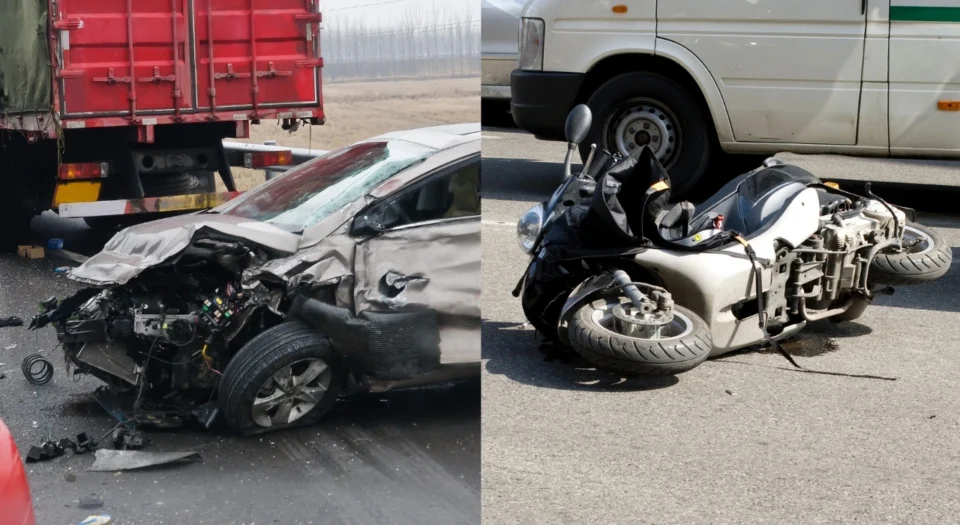
When it comes to road safety, there’s a vast difference between driving a car and riding a motorcycle. The recent U.S. data shares a shocking revelation, as although motorcycles make up only 3% of registered vehicles, the motorcyclists contribute to nearly 15% of traffic deaths nationwide.
Car accidents occur more frequently on roads, but motorcycle crashes turn out to be more deadly because they are likely to result in severe injuries or even death. The unavailability of safety components in motorcycles leaves the riders exposed to the direct lethal impact.
As the fatality rates skyrocketed in recent years, understanding the statistics of car accidents vs motorcycles becomes crucial. This blog shares the updated data on car and motorcycle accidents, reflecting the current risk trends that not only drivers and riders, but anyone who shares the road should know.
Key Motorcycle vs Car Accident Statistics
NHTSA reports indicate that U.S. road fatality rates have been reduced recently when compared to previous 2019 data; however, they are still higher now. Sources indicated that around 40,990 people have lost their lives in motor vehicle collisions. Overall, road deaths and lethal injuries remain an alarming issue to public road safety, with thousands of people killed annually. The table below shares shocking key statistical details that you should understand the hidden road dangers.
| Stats | Car | Motorcycle |
| Registered vehicle share | Majority | ~3% |
| Traffic death share | Larger | ~15% |
| Fatality risk (per mile) | Baseline | ~28× higher than a car |
| Injury Risk (per mile) | Baseline | ~5× higher than a car |
As per the motorcycle vs car accident statistics table, motorcycle riding in the U.S. brings in more threats, like increased fatality and injury risk per mile traveled, than driving a car. Although cars are more involved in deadly crashes, still, motorists witness more tragic outcomes than car occupants. Those who want to know how bicycle accidents threaten people’s lives can check this Motorcraz article explaining the current situation of bicycle accidents in Glendale and determine whether it has really improved.
Why Is a Motorcycle Crash More Fatal Than a Car Accident?
A recent study of Abercrombiepa by Jessica Lawson revealed that motorcycle collisions are more lethal than car accidents for several reasons. The most significant factor behind Motorcycle accident fatalities is the complete unavailability of structural protection for a rider. In cars, drivers and passengers remain enclosed in a metal structure, while motorcyclists remain fully exposed to the outside environment.
Moreover, new generation cars often come with multiple safety features like crumple areas that absorb the crash shock, seatbelts and airbags. On the other hand, motorcycles aren’t protected with any restraint or energy-absorbing systems. After a collision, motorists are often thrown from the bike, which can cause them more injuries by hitting with ground, other vehicles, or fixed objects, like poles or trees. Since the absence of proper protection, the injuries in a motorcycle crash are more catastrophic and life-threatening.
Besides this, motorcyclists have a narrow profile that makes it challenging for drivers to see, especially in intersections and blind spots. Sources hinted that many car-motorcycle crashes occur when a car driver fails to observe the incoming motorcycle. This miscalculation of speed and distance is the key factor to understanding the threats of motorcycle accidents vs car accidents statistics.
You May Also Like: New Eyewitness Reports Reveal Details on Wenatchee Car Accident Victims.
Common Causes of Crashes
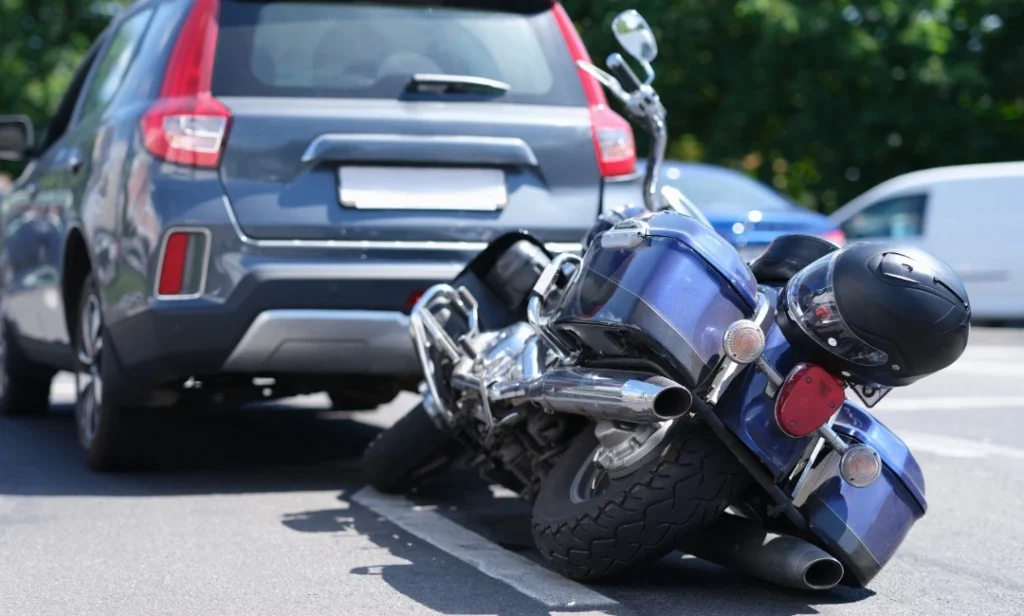
Traffic crashes in both cars and motorbikes are primarily caused by human error, where factors like speeding, impaired and reckless driving are the main contributing factors. The Jacob Swann car accident story is the prime example of how distracted driving habits changed a victim’s life within the blink of an eye. In these situations, motorcyclists often receive more injuries, such as traumatic brain injury, paralysis and spinal cord injuries, severe fractures, and even internal organ damage. The table below explains the primary reasons behind fatal motorcycle crashes and car accidents, which will help you know the risks better.
| Primary Cause | Car Accidents | Motorcycle Accidents |
| Speeding | Leads to fatal crashes | High contribution in lethal crashes (33% of riders were noticed speeding) |
| Driver Error | The primary cause of accidents, resulting in about 94% of crashes | Leading cause, as when a car driver’s failure to notice the motorist is a significant factor |
| Impaired Driving | Significant reasons for fatalities | Increased rates of alcohol impairment in lethal crashes |
| Visibility Issues | Fewer contributions due to the vehicle size | A primary reason as car drivers fail to judge motorists’ distance and speed, leading to deadly collisions |
| Single-Vehicle Crashes | ||
| Distracted Driving | The top accidental cause in the U.S. | Bikers are highly prone to inattentive drivers who fail to check blind spots or notice small vehicles. |
| Road Hazards | Less inconvenience due to potholes and gravel | They possess lethal dangers, as they can cause loss of control and balance. |
The Hidden Gaps in the U.S. Road Safety
Comparing the statistics of motorcycle vs car accidents, road safety disproportionately impacts motorists more. Industry experts say that motorcyclists are 28 times more likely to be fatality in a crash per mile travelled than passenger vehicle occupants. It is to be noted that U.S. roads were primarily built keeping four vehicles in mind. Potholes, cracks and uneven pavement are often minor inconveniences for cars, but they can be deadly for motorists.
Related: How a Car Accident Lawyer in Irvine Helps You Win Higher Claims?
The standard guardrails, which are designed to protect cars, can be deadly for motorcyclists. The U.S. lacks a standard for motorcycle-friendly barriers, which are most common in Europe. Moreover, the paint used for road marking can turn slick when wet, which can be dangerous for motorists as it can cause slippage issues.
Only a few states have loop detectors and traffic signals that can accurately monitor motorcyclists. The car-focused design culture contributes to car drivers who fail to see motorcycles. It has been noticed that drivers often misjudge the speed and distance of a bike, resulting in crashes that are minor issues for the car occupant but can be lethal for the rider.
The Final Words
The recent statistics of motorcycle vs car accidents show that motorists face more lethal threats and injuries when compared to car accidents. In addition, the gaps in the U.S. road safety highlight that Motorcycle accidents and injury types are more deadly, as poor road infrastructure contributes to making the situation worse.
In such circumstances, understanding accidental injuries will help you with a clear timeline on how you can seek out treatments. For more information on this, you can check out this MotorCraz article on car accident injuries and a treatment guide.
FAQ’s
What Has More Accidents, Cars or Motorcycles?
Cars are involved in more accidents as there are far more cars on the road. However, motorcycle vs car accident statistics show that motorcycles are involved in more severe crashes. These latest statistics reveal that injuries and deaths are more common for riders, this is mainly due to the lack of rider-protection.
Are You Safer in a Car or a Motorcycle?
Considering all the factors, it is discovered that individuals are usually safer in a car than on a motorcycle. Since cars offer airbags, seat belts and a protective structure, Motorcycle accident fatalities are higher per mile traveled. According to motorcycle vs car accident statistics, riders face significantly greater injury severity.
What Kills Motorcyclists the Most?
Sources indicated that head injuries are the primary cause of fatal motorcycle crashes, and the lack of helmet use significantly increases the risk. In this case, motorcycle accidents and injury types include head trauma, internal bleeding and spinal injuries. Most importantly, high-speed impacts and collisions with cars make the situation more deadly.
Who is At Fault in a Bike vs Car?
The answer to these questions on fault depends on the facts of the collision, not the vehicle type. Sources indicated that drivers fail to see motorcycles while changing lanes in many cases. The statistics of motorcycle vs car accidents show that cars are often at fault in intersection crashes. In deciding faults, insurance and policy reports play a significant role.
